
Essential Food Storage Tips for a More Organized Kitchen
Keeping your kitchen organized around food storage reduces waste, saves time, and makes meal prep more enjoyable. Small changes to how you store perishables, dry goods, and cookware can create a more efficient flow and help you use what you already have.
This guide covers practical, easy-to-implement tips—smart fridge habits, pantry container choices, drawer systems, and cabinet solutions—that fit real kitchens and busy routines.
Why smart food storage matters
Good storage keeps food fresher longer, prevents cross-contamination, and gives you a quick visual inventory so you avoid unnecessary buys. Organization also protects countertops and cabinets from spills and pests, and it shortens cleanup time after cooking.
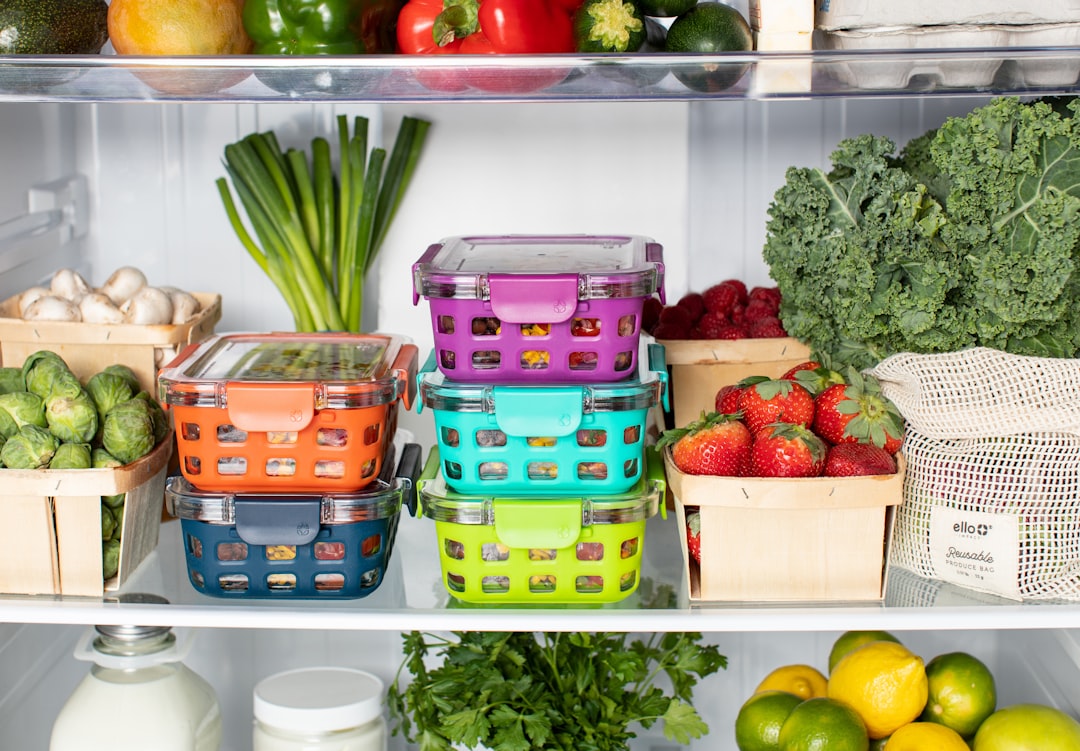
Organizing your refrigerator for visibility and freshness
Start by zoning the fridge: top shelves for ready-to-eat foods, middle for dairy and leftovers, bottom for raw meat, and drawers for produce. Use clear bins and labels to hold small items so nothing gets lost at the back.
For a quick upgrade, invest in sturdy bin solutions designed for fridge use—they make it easier to slide items in and out and to move food to the counter for prepping. Consider dedicated solutions such as Refrigerator Organizer Bins to create zones and keep spills contained.
Pantry and dry goods: containers, labeling, and rotation
Switch from bags to uniform, airtight containers for staples like flour, rice, sugar, and cereal. Clear containers let you see quantities at a glance and stack safely to maximize shelf space. Transfer spices and small dry goods into jars or small bins to avoid clutter.
If you need versatile storage for multiple areas—pantry, fridge, or freezer—consider multi-use clear organizers that resist odors and are easy to clean. A practical option is the Clear Plastic Storage Bins, Pantry …, which simplify grouping and rotation.
Maximize cabinet space for pots, pans and lids
Pots and pans often create the most cabinet chaos. Store lids vertically on a rack or in a designated section so you can grab matching pairs quickly. Use risers or slotted organizers to stack cookware without pinching handles or scratching surfaces.
Built solutions for cookware help you reclaim cabinet depth and make retrieval far easier—look at dedicated Pot and Pan Organizers or a product designed to expand and hold lids and pans like the MUDEELA Pots and Pans Organizer Rack.
Drawer strategies: utensils, gadgets, and small items
Give every tool a home. Arrange utensils by frequency of use—daily tools in the front, occasional gadgets toward the back. Use shallow compartments for silverware and deeper sections for spatulas or whisks so nothing becomes a tangled pile.
Pre-made systems speed up this process. Choose modular units that fit your drawer depth and allow you to reconfigure as needs change; a category to start with is Kitchen Drawer Organizers.
Drying, storing, and protecting dishware
How you dry and store plates, bowls, and cups affects countertop clutter and breakage. Use a compact drying station to keep wet items off counters and promote airflow; when items are dry, move them promptly into cabinets with a clear order—plates together, bowls stacked, and glasses upright.
A dedicated Dish Drying Racks that fits your sink area reduces drip and makes it easier to maintain a clear workspace.
Cleaning and maintenance: keep organizers working for you
Schedule a short wipe-down routine for bins, shelves, and organizers—every two weeks for high-use areas and monthly for less active spots. Clean, dry storage pieces before returning food to prevent mold and odors.
Always protect your hands and avoid cross-contamination during cleaning by using safe, reusable gloves. For regular kitchen cleanup chores, consider Reusable Cleaning Gloves to stay efficient and hygienic.
Smart labeling, dates, and FIFO (first in, first out)
Label containers with contents and the date opened or cooked. Use a simple date-label system or pre-printed stickies. Place newest items behind older ones so you use food before it expires. This rotation method (FIFO) dramatically reduces food waste.
Checklist: Quick actions to organize food storage now
- Declutter expired items from pantry and fridge.
- Group similar items into clear bins for visibility.
- Install a compact ANTOWIN Bamboo Drawer Dividers Orga… for utensils and tools.
- Use stackable clear bins for bulk dry goods.
- Reserve lower-cabinet space for cookware and add a rack for lids.
- Place a functional drying rack near the sink to free counter space.
- Wipe and sanitize bins and racks on a biweekly schedule.
Practical layout ideas for different kitchen sizes
Small kitchens: prioritize vertical storage—use slim bins and drawer organizers that make the most of narrow spaces. Keep daily-use items within arm’s reach and store infrequently used appliances higher up.
Medium to large kitchens: create dedicated zones (prep, cooking, storage). Assign a cabinet for plates and a nearby drawer for flatware; consider a designated pantry section with stackable clear containers and labels so everyone in the home knows where items belong.
Frequently asked questions
-
How often should I clean my fridge and pantry?
Wipe shelves and discard spoiled food every 1–2 weeks; deep-clean and reorganize monthly.
-
Are clear containers really worth it?
Yes—visibility reduces duplicates, makes portioning easier, and speeds up inventory checks.
-
What’s the best way to store opened bags (like chips or flour)?
Move them into airtight containers or resealable bins to preserve freshness and deter pests.
-
How can I prevent cookware from scratching when stacked?
Use protectors between pans, store lids vertically, or use an organizer that separates each piece.
-
Should I air-dry dishes or towel-dry?
Air-drying is more hygienic; use a draining rack to speed drying and then put items away once dry.
Conclusion: A practical takeaway
Start small: pick one area (fridge, pantry, or a drawer), declutter, add one organized storage solution, and adopt a labeling habit. Consistent, simple steps—using clear bins, drawer organizers, and a place for every item—will turn a chaotic kitchen into a functional space that saves time and food.
Products Featured in This Article
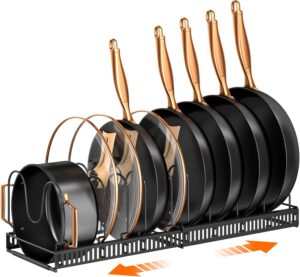
MUDEELA Pots and Pans Organizer Rac…
Product description Just declutter your kitchen organization and storage effortlessly with the MUDEELA pots and pans…
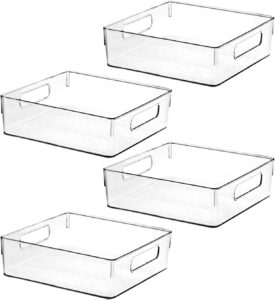
Clear Plastic Storage Bins, Pantry …
Product description Product Dimensions 10.8″L x 7.9″W x 3.4″H Clear storage bins *Shatter proof *Easy to…
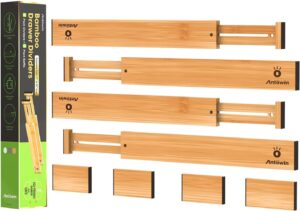
ANTOWIN Bamboo Drawer Dividers Orga…
From the brand Founded in 2019, ANTOWIN was with a goal of developing high-quality bamboo drawer…